Perimenopause Anxiety: Why You Suddenly Feel Anxious and Don’t Feel Like Yourself
Category
September 3, 2026
Published
Maybe you’ve always been the woman who could handle a lot.
You manage your career, your family, your schedule, your responsibilities, and the never-ending mental list running through your head.
But lately, something feels different.
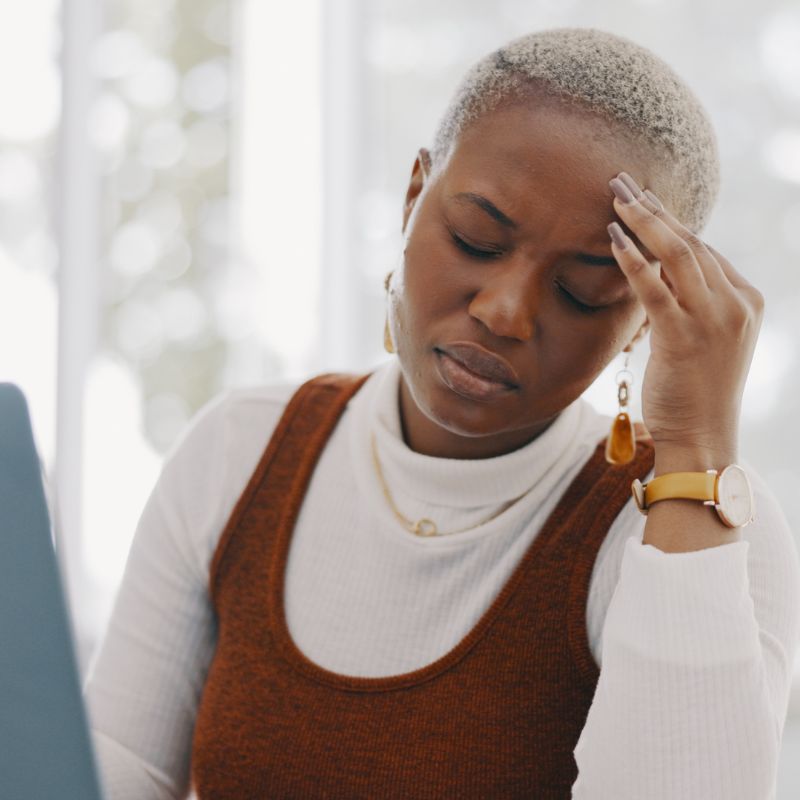
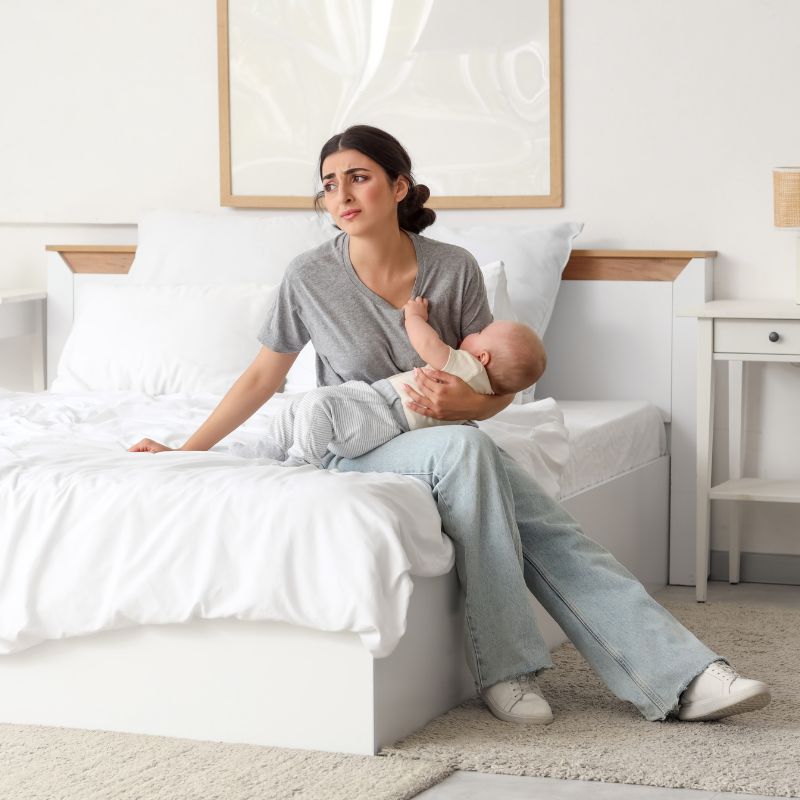
You’re more anxious than you used to be. Little things feel overwhelming. You may wake up in the middle of the night with your mind racing. You’re more irritable. It’s harder to concentrate. Things that you used to handle without thinking suddenly feel like too much.
And maybe the most frustrating part is that you can’t figure out why.
If you’re in your late 30s, 40s, or early 50s, there’s another possibility worth considering:
Perimenopause.
Anxiety during perimenopause is real, and for some women, changes in anxiety, mood, sleep, and concentration can show up alongside, or even before, the symptoms we traditionally associate with menopause.

Can Perimenopause Cause Anxiety?
Yes. Anxiety can occur or worsen during the menopause transition.
Perimenopause is the transitional period before menopause when ovarian hormone production begins to change. Estrogen and progesterone don’t simply decline in a straight line. They can fluctuate significantly throughout this stage.
Those hormonal changes don’t only affect your menstrual cycle.
They can also interact with systems involved in mood, stress response, sleep, and cognition.
That means perimenopause may look different from what you expected.
You don’t necessarily have to be having severe hot flashes and night sweats to start wondering whether hormonal changes could be contributing to the way you feel.
For some women, the first thing they notice is:
“Why am I suddenly so anxious?”
What Does Perimenopause Anxiety Feel Like?
Perimenopause anxiety doesn’t look exactly the same for every woman.
You might notice:
- Constant worrying or overthinking
- Feeling overwhelmed much more easily
- Racing thoughts, especially at night
- Difficulty relaxing
- Feeling more emotionally reactive
- Irritability or a shorter fuse
- Feeling physically tense or “on edge”
- Trouble falling or staying asleep
- Heart racing or feeling panicky
- Difficulty concentrating
- Brain fog or forgetfulness
- Feeling less resilient to stress
- Waking up feeling anxious
- Feeling like small problems suddenly feel enormous
- A general sense that you just don’t feel like yourself
Sometimes women who have experienced anxiety in the past notice that it becomes harder to manage during perimenopause.
Other women tell me something completely different:
“I’ve never been an anxious person. Why is this happening to me now?”
Both experiences deserve a closer look.

Why Can Anxiety Get Worse During Perimenopause?
There usually isn’t one simple explanation.
Hormones and Your Brain Are Connected
Estrogen has effects throughout the brain and interacts with neurotransmitter systems involved in mood, motivation, concentration, and emotional regulation.
As hormone levels become more unpredictable during perimenopause, some women notice changes in how they feel emotionally and cognitively.
This is one reason I don’t like treating women’s mental health and hormonal health as though they exist in completely separate boxes.
Your brain is part of your body.
Your hormones can influence how your brain functions, and your mental health can also affect how you experience physical symptoms.

Sleep Can Make Everything Feel Worse
Maybe you’re falling asleep but waking up at 2 or 3 a.m.
Maybe you’re suddenly a lighter sleeper.
Maybe you wake up hot, uncomfortable, or with your mind immediately running through tomorrow’s responsibilities.
Poor sleep can make it much harder to regulate emotions, concentrate, tolerate stress, and manage anxiety.
So sometimes what feels like “my anxiety is getting out of control” is actually a combination of hormonal changes, anxiety and disrupted sleep feeding into one another.

Midlife Is Already Demanding
There is another piece that shouldn’t be ignored.
Women experiencing perimenopause are often doing it during one of the busiest periods of their lives.
You may be advancing in your career, running a business, raising children, managing a household, navigating relationship changes, caring for aging parents, or trying to do several of these things at once.
Then your body changes the rules.
The amount of stress you used to manage fairly well suddenly feels harder to carry.
That doesn’t mean everything you’re experiencing is “just stress.”
It means we need to look at the whole picture.
Is It Anxiety or Is It Perimenopause?
Sometimes this is the wrong question.
It can be both.
A woman may have an anxiety disorder that becomes more difficult to manage during perimenopause.
Another woman may experience new anxiety symptoms during the menopause transition.
Someone else may be sleeping poorly, experiencing hormonal changes, dealing with significant life stress, and have another medical or nutritional factor contributing to how she feels.
That’s why simply labeling every symptom “anxiety” can miss part of the picture.
But blaming every mental health symptom on hormones can miss important things, too.
A thoughtful evaluation asks:
What is actually contributing to these symptoms for this particular woman?

What Else Can Look Like Perimenopause Anxiety?
When a woman comes to me feeling anxious, exhausted, foggy, or unlike herself, hormones are one piece of the puzzle, but they aren’t the only thing worth considering.
Depending on her symptoms and medical history, an evaluation may also consider things such as:
- Anxiety or depressive disorders
- ADHD or changes in existing ADHD symptoms
- Chronic sleep disruption
- Thyroid function
- Iron status
- Vitamin B12 and folate
- Vitamin D
- Blood sugar and metabolic health
- Medication effects
- Substance or caffeine use
- Significant life stressors
- Menstrual and reproductive history
- Other medical conditions
Not every woman needs every test, medication, supplement, or hormone.
The goal should be to understand your symptoms and determine what deserves attention rather than assuming every woman in her 40s needs the exact same treatment.
How Is Perimenopause Anxiety Treated?
There isn’t one universal treatment for perimenopause anxiety.
Depending on what is driving your symptoms, your treatment plan may include one or several approaches.
Psychiatric Medication
For some women, treating an underlying anxiety or depressive disorder with psychiatric medication may be appropriate.
For others who are already taking medication, perimenopause may be a time to reassess whether the current treatment is still working well.
Hormone Therapy
Hormone therapy may be appropriate for some women experiencing symptoms during the menopause transition, depending on their symptoms, medical history, risks, and treatment goals.
It isn’t automatically the answer to every mood symptom during perimenopause, which is why an individualized assessment matters.
Therapy and Stress Support
Therapy can be particularly helpful when anxiety, major life transitions, relationships, caregiving responsibilities, work stress, or longstanding thought patterns are contributing to symptoms.
Sleep
Sleep deserves much more attention than it usually gets.
Improving sleep may have a meaningful impact on mood, concentration, energy, and your ability to cope with everyday stress.
Nutrition, Movement, and Lifestyle
Exercise, nutrition, alcohol and caffeine intake, stress management, and other daily habits can also influence how you feel.
These aren’t replacements for appropriate medical or psychiatric treatment.
They are additional pieces of a comprehensive plan.

Do I Need a Psychiatrist, Gynecologist, or Menopause Provider?
This is where women can understandably become confused.
You might wonder:
Do I talk to my psychiatrist about this?
Do I need to see my gynecologist?
Should I sign up for an online menopause service?
Do I need hormone therapy?
Do I just need my anxiety medication changed?
The answer depends on what you’re experiencing.
If your primary concern is mental health but you’re also noticing menstrual, sleep, cognitive, or other changes that seem to coincide with perimenopause, it can be helpful to work with someone who understands how these areas overlap.
You shouldn’t necessarily have to choose between having your mental health evaluated and having your hormonal health taken seriously.
A Different Approach to Perimenopause Mental Health Care
At Behavioral Wellness for Women, I specialize in women’s mental health and take an integrative approach to symptoms that can emerge or change across a woman’s reproductive life.
That means we’re not automatically assuming:
“It’s just anxiety.”
But we’re also not automatically assuming:
“It’s all hormones.”
Instead, I look at the larger clinical picture, including your psychiatric symptoms, menstrual and hormonal history, sleep, cognitive changes, relevant laboratory findings, medications, supplements, lifestyle, and what has changed for you.
The goal isn’t to prescribe as much as possible.
It’s to determine what actually makes sense for you.
Depending on the individual, treatment may involve psychiatric medication management, hormone-related treatment when clinically appropriate, supplements, lifestyle recommendations, additional testing, referrals, or a combination of approaches.

Looking for Perimenopause and Women’s Mental Health Care?

Behavioral Wellness for Women provides virtual women’s mental health and perimenopause care for eligible women located in Pennsylvania, New Jersey, Delaware, and Florida.
If you’ve been dealing with anxiety, irritability, brain fog, poor sleep, difficulty concentrating, mood changes, or the feeling that you simply aren’t yourself anymore, you don’t have to decide on your own whether it’s “mental health” or “hormones” before asking for help.
That’s part of what a comprehensive evaluation is designed to figure out.
Ready to understand what may be contributing to the way you’ve been feeling?
Schedule a CareFit Call to learn more about working together.
Brianna Dawson
MSN, PMHNP-BC